…prompted by my fascination with brain research and Diamond’s explanation of executive function mentioned in class today, I thought I’d review for myself and share her ideas.
“Jem parceled out the roles: I was Mrs. Radley, and all I had to do was come out and sweep the porch. Dill was old Mr. Radley….Jem, naturally was Boo…” (39).
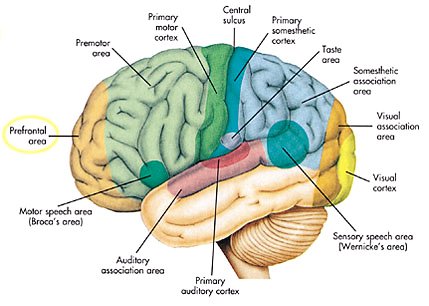
Reading about Scout, Jem, and Dill playing their Boo Radley game in Harper Lee’s To Kill a Mockingbird helps me better understand what I have read about what the neuroscientist Adele Diamond calls the "executive function." A part of the brain’s prefrontal cortex, it is the most recently evolved part of the human brain. As we grow from babies into adults, the prefrontal cortex is the last brain area to mature.
The executive function (EF) is essential in helping people live safely as part of a society. Children need lots of play time to develop this capacity. As Diamond explains the EF has three essential roles in thinking. The first role is the inhibitory control which is the ability to stop yourself from doing the wrong or the most natural thing. Instead, you are able to choose to do something else. This ability to restrain spontaneity or to show discipline is much weaker in children than in adults, but as children grow, their inhibitory control improves. So, Scout uses her inhibitory control while she plays their acting games when, even though Scout does not want to play the role of Mrs. Radley, she sticks with it and helps to make the play better.
“We polished and perfected it, added dialogue and plot until we had manufactured a small play upon which we rang changes every day” (39).
The second role of the EF is that it controls the working memory which holds information in mind. The working memory holds usually five to seven items or chunks of items in mind at a time. The EF helps the mind play with the information. People need the working memory for creativity because the essence of working memory is “holding things in mind, dissembling them, and putting them together in new ways” When playing the Radley game, Scout has to focus on the details of the moment and go with any changes that Jem and Dill might make. She remembers what they said and did and then can react appropriately in character.
Cognitive flexibility is the third role of the EF. This is the ability to see things from different perspectives. People are able to switch the way they are thinking about things, becoming able to think outside the box.
Scout, Dill and Jem develop their EF capacities as they act out the books they have read and then the story of Boo Radley. It takes working memory to remember what role they each picked. In order for the game to go smoothly, they have stay in the character that they have chosen. And then for them to be able to make “changes every day,” they flex their thinking to see nuances and add creative details using their imaginations.
For more information on Adele Diamond's work, listen to her interview: http://being.publicradio.org/programs/2009/learning-doing-being/


Wow, well done Meg. I just commented on Jamie blog because I like the connection she made between Adele Diamond and "unplugging" our school. Then you take the same idea but connect it do something completely different. As we approach the final days of this program, I really appreciate the major themes that flow through everything we have learned and my new found ability to recognize them. Thanks for your insight!
ReplyDelete